Education Equity

Platform

HeyArya!

I built an AI math tutor that explains things the way Feynman would: simply, honestly, and at whatever level you are actually at. No answer dumping. Just learning.

9k+ views
100 active users
9 countries
4 core math subjects

Why I built it

Saksham and Live the Learning taught me that access to learning is uneven. HeyArya! was my attempt to scale the other side: a tutor that anyone with a browser could reach, at midnight before an exam, in a village with no coaching center, or in a classroom where the teacher has forty students and ten minutes.

I did not want another app that solves problems for you. I wanted something that walks you through the thinking, adjusts when you are lost, and treats confusion as the starting point rather than a failure.

What it does

HeyArya! is an AI-driven educational platform for interactive math tutoring. I designed it around three ideas pulled straight from how Feynman taught:

  • Clear explanations. Complex concepts broken down without dumbing them down.
  • Interactive learning. Conversation, not a wall of generated text.
  • Personalized tutoring. Responses tuned to your level, not a generic syllabus script.

Students can jump into calculus, algebra, geometry, or statistics and ask what they actually need: a concept explained, a step unpacked, a problem walked through from first principles.

What I built

I built and shipped the full stack myself: the tutoring interface, the adaptive prompting layer, and the subject routing that sends a question to the right kind of explanation. I tuned the system so it nudges toward understanding rather than handing over a finished solution, which matters when ChatGPT shortcuts are the default.

The Feynman thread is not cosmetic. It shapes how the model is instructed to respond: use plain language, check whether the student followed, and re-explain from a different angle when they did not.

Where it stands

HeyArya! has passed 9,000 views with around 100 active users across 9 countries. It is live, free to try, and still the project I iterate on when I think about who gets a tutor and who does not.
Try HeyArya! →

Guide

Live the Learning

A teacher handed me a crumpled note. Five lines on what wasn't working — and the starting point for a guide I took into schools and STEAM labs.

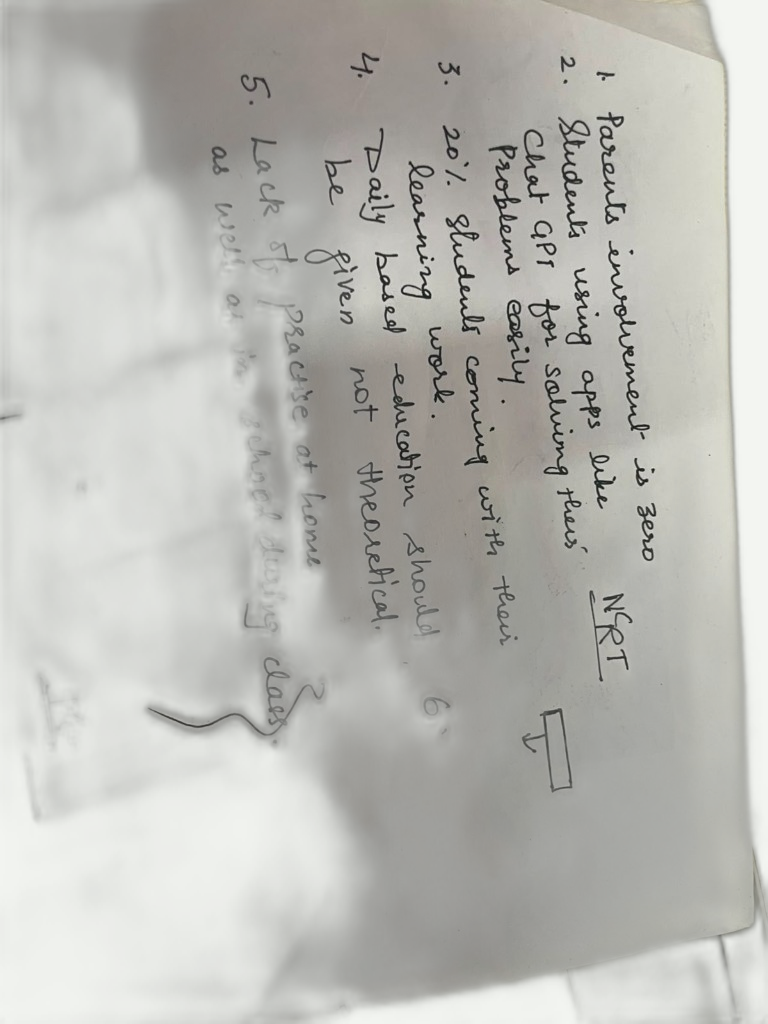
Handwritten note from a teacher listing five things they want changed
The note that started it — folded, annotated, real.

Where it started

I was visiting schools to understand how NEP 2020 was landing on the ground. One teacher didn't give a polished briefing. She slid this piece of paper across the table — a quick list of what she wanted changed, written in the margins between classes.

It wasn't abstract policy talk. It was specific, frustrated, and honest:

  1. Parents' involvement is zero.
  2. Students use apps like ChatGPT to solve problems instead of thinking through them.
  3. Only about 20% of students arrive with their learning work done.
  4. Education should be daily and experiential — not purely theoretical.
  5. There is a lack of practice at home and in the classroom during class time.

That list became the design brief. Not a deck of slides — a guide teachers could actually run with: modules, activities, reflection prompts, and ways to bring parents and practice back into the loop.

What we built

Live the Learning is a nine-module CAS guide to experiential learning aligned with NEP 2020. Each module moves from concept to classroom activity to reflection — built so a teacher can pick it up without a training workshop first.

The guide covers creativity, activity, and community engagement — the kind of learning that sticks because students do something, debrief it, and connect it back to the syllabus instead of copying an answer off a screen.

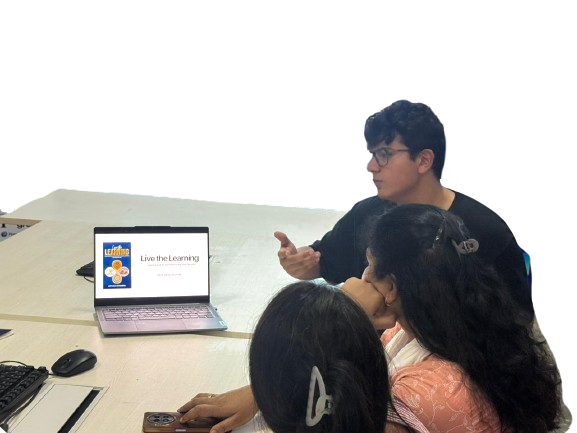
Presenting Live the Learning on a laptop — the guide cover on screen
Presenting the guide — the cover reads Live the Learning: A Guide to Experiential Learning.
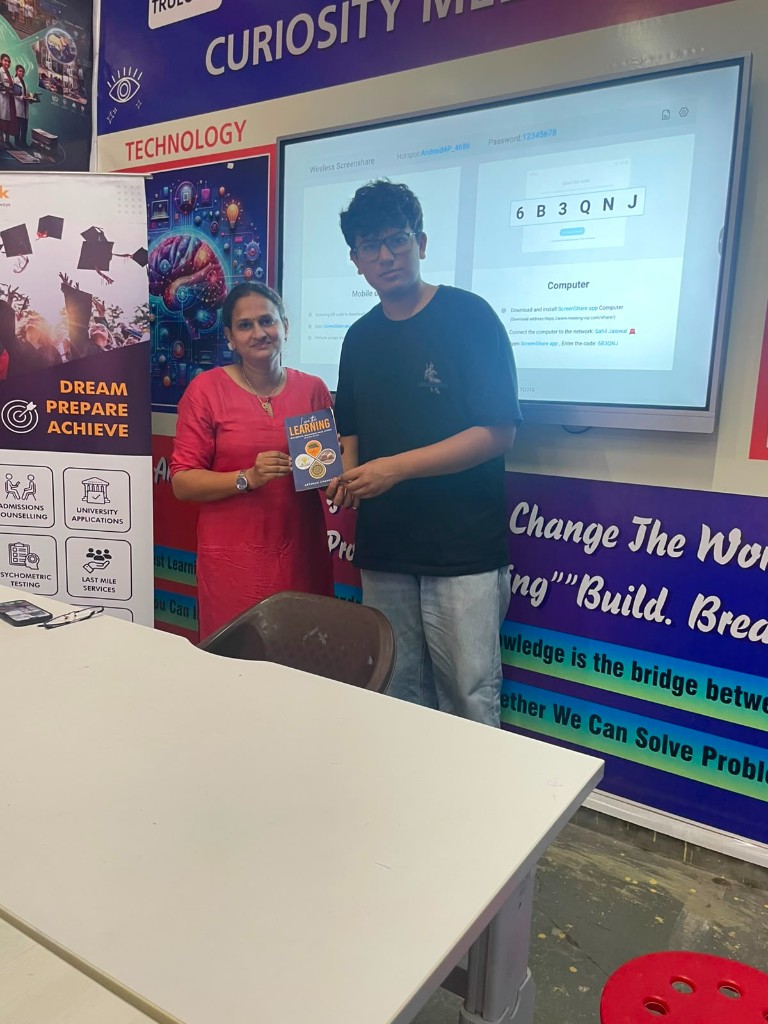
Holding the printed Live the Learning guide
The printed guide — meant to be marked up, folded, carried into class.

In the field

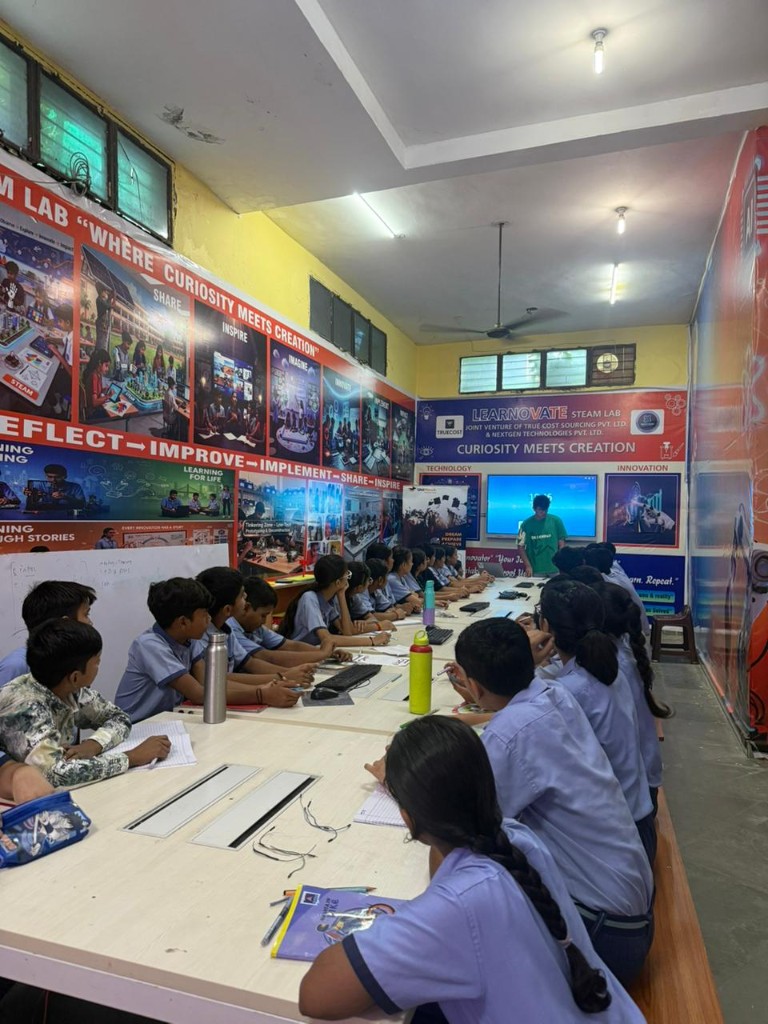
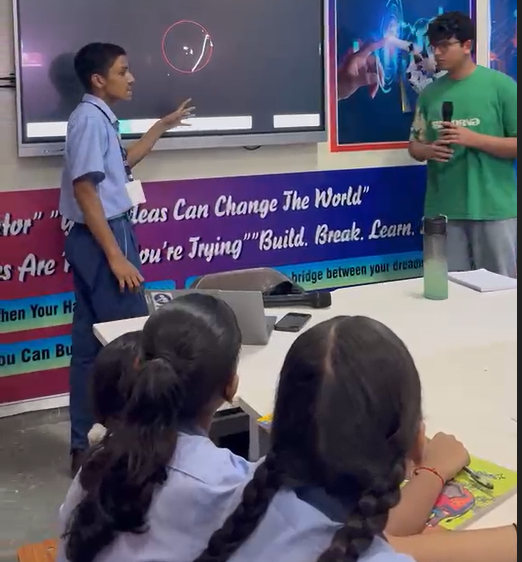
We deployed across 5+ schools and STEAM labs. The goal wasn't a pilot that looked good in a report — it was to see whether teachers would actually use the modules, whether students would show up with work, and whether the daily, hands-on structure could compete with the shortcut culture the note described.

What I'm still figuring out

The ChatGPT problem doesn't go away because you hand out a better workbook. Parent involvement needs more than a module — it needs systems schools don't always have. And "daily experiential learning" is easy to say and hard to schedule when the syllabus is packed.

But the note mattered because it named the gap plainly. Live the Learning was my attempt to close it — one module, one classroom, one crumpled piece of paper at a time.

NGO

Saksham

I built Saksham as a school-based NGO to reach underprivileged and differently-abled children in the schools they already attend. I did all the engineering myself. I also led the mentoring programs and the systems that kept running after I left.

300+ students across 10 schools
50+ visually impaired students using my devices
60% reduction in corridor navigation time
50 volunteers I led on programs and systems

What it is

Saksham is a school-based NGO I built to meet students where they already are: government schools across Delhi, not a separate charity bubble. I partner with institutions serving underprivileged and differently-abled children, and I show up with engineering, mentoring, and the boring infrastructure schools are never funded for.

Two anchor partners: the AICB Captain Chandanlal Special School for the Blind in Behrampur, Gurgaon (a residential school for blind boys and girls from preschool through class 8) and Govt. Senior Secondary School, Bhajgera. The work spreads from there across the Delhi government school network.

Three devices · patent pending

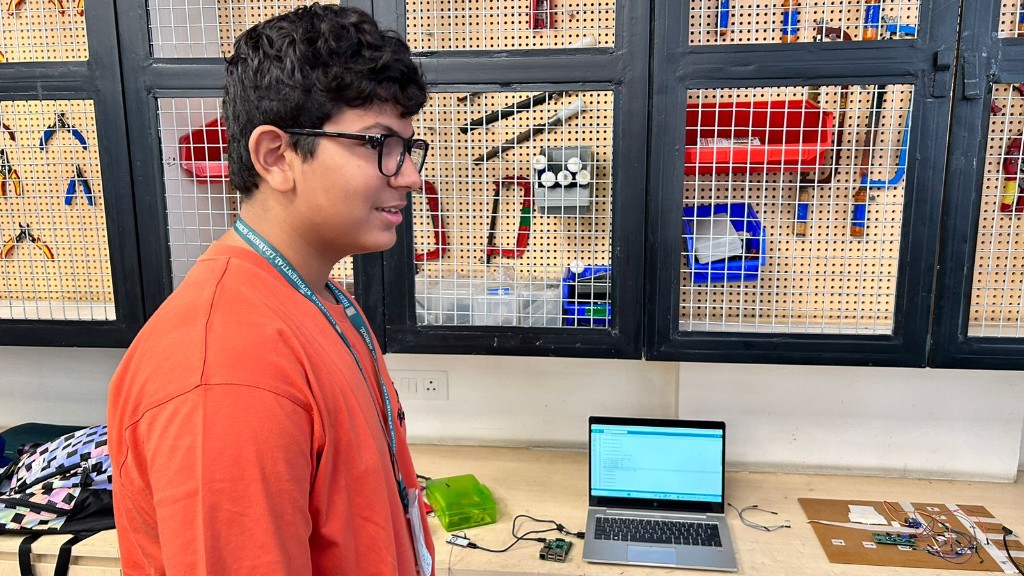
I designed and built all three assistive tools myself. I deployed them with 50+ visually impaired students in school corridors and classrooms. All three innovations are patent pending.

  • Ultrasonic walking stick Patent pending

    I built this with HC-SR04 sonar and haptic feedback for obstacle detection under ₹5,000 per unit. I designed it for scale, not lab demos. In daily use it cut average corridor navigation time by 60%.

  • Lip-reading cap Patent pending

    I ran edge inference on a Raspberry Pi: a vision layer for silent communication and context a cane cannot provide. I optimized the model with quantization until latency was usable on the hardware schools actually had.

  • Morse-code haptic sentiment feedback Patent pending

    I built a tactile channel for emotional and social cues, translating sentiment into Morse-pattern vibrations students can read without sight or sound.

Programs & systems

Hardware alone does not fix a school. I led a team of 50 volunteers to build what lasted after I left:

  • Mentoring programs pairing older students with younger ones across partner schools.
  • Attendance systems schools could maintain without me in the room.
  • Progress indicators: simple, visible tracks of whether a student was actually moving forward.

Together, these reached 300+ students across 10 schools. Not a one-week camp, but structures teachers could keep running.

Science lab

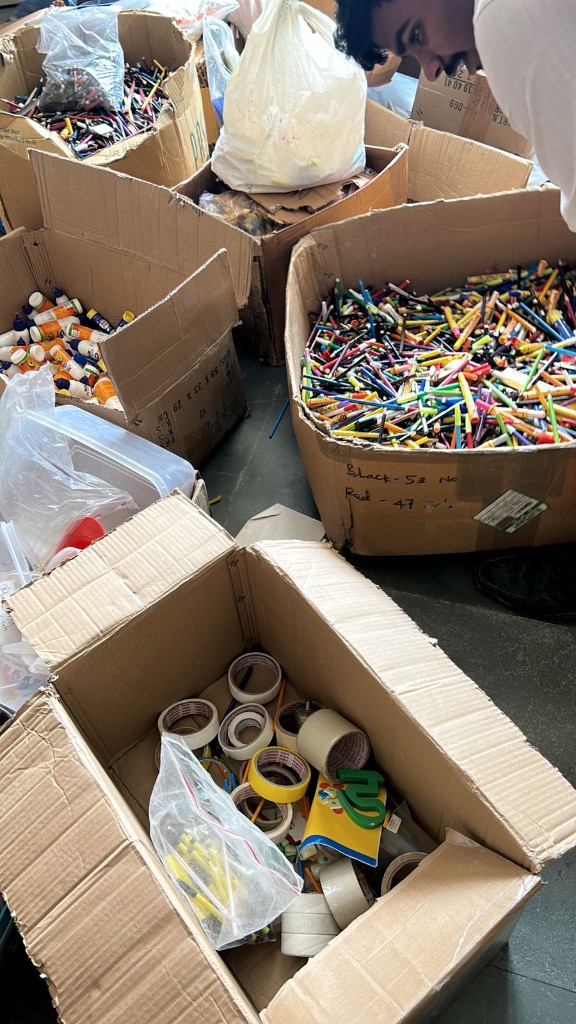
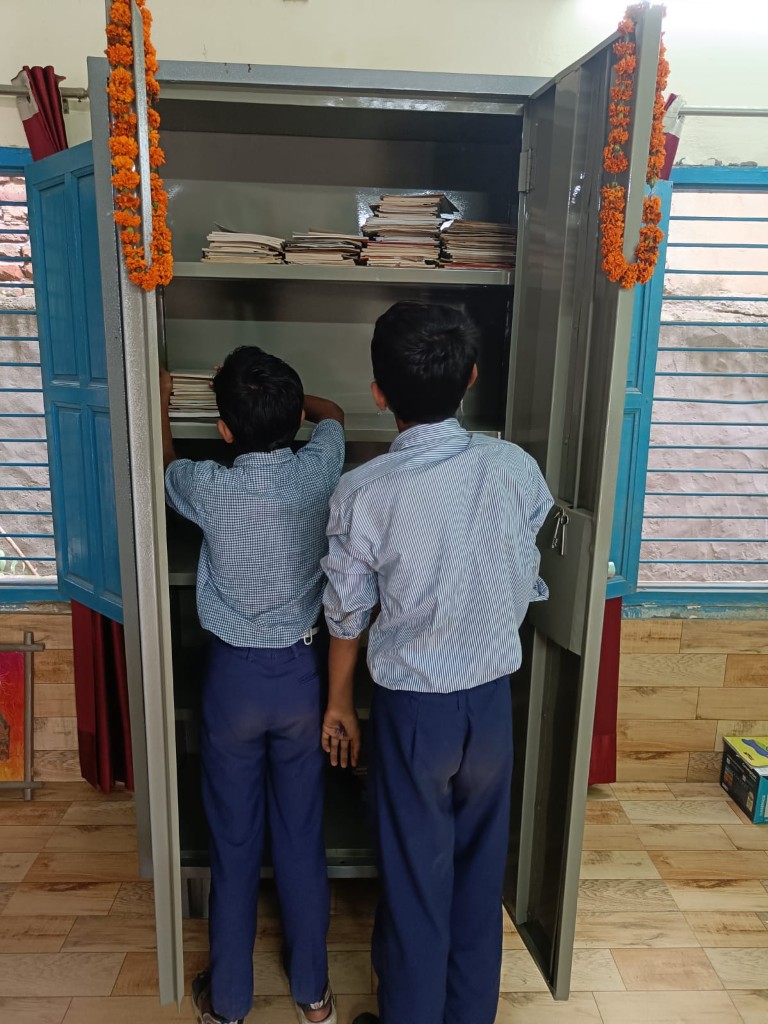
I raised $1.2K to open a science lab at a partner government school: cabinets, materials, and storage so hands-on learning was not theoretical anymore.

The lab was the first time many of them had a room that was theirs to experiment in. Not a slideshow, not a textbook chapter, but drawers they could open and mess up.

Why Captain Chandlal

The Chandanlal school is unlike most places I have worked. Over 100 blind students, free residential education, a touch-and-tell museum, adapted science kits, yoga and judo, and children who compete with sighted students in co-curricular events and win. I built Saksham's assistive tech for corridors like theirs: narrow, crowded, familiar to the students but unforgiving if your tools lag behind.

Learn more about the school →